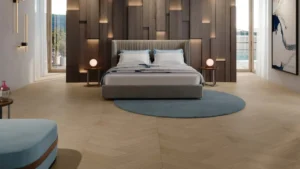
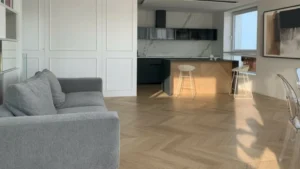
Wood flooring patterns have been symbols of sophistication for centuries and are often used to enrich high-end environments. Among the most iconic are theHerringbone andChevron patterns, which are often confused, but each has its own distinct characteristics.
To transform your space with elegance, it’s essential to understand the differences between them and the best way to apply them to your project.

Herringbone vs Chevron: what are the differences?
Both patterns create a dynamic visual effect, but the way the wooden planks are arranged makes all the difference to the final result.
Herringbone
The boards are cut at right angles (90º) and arranged in a zigzag pattern, creating a dynamic pattern.
This pattern is more associated with a classic, traditional style and is perfect for historic spaces.

Hungarian stitch (Chevron)
The boards are cut at 45º or 60º angles, forming a continuous “V” pattern.
The visual effect of this pattern is more fluid and modern, creating a sense of linear movement.
It works well in contemporary and minimalist spaces, as it adds sophistication without making the room visually heavy.

What are the advantages of each format?
Each pattern has characteristics that influence the perception of space differently:
- The Herringbone format has a classic, traditional style with a dynamic visual effect. Its installation requires moderate complexity, making it ideal for classic or historic environments. It also adds depth and character to the space.

- The Hungarian Point format, on the other hand, is more modern and elegant, creating a fluid and continuous effect. Its installation is more complex, but the result is perfect for contemporary and minimalist environments, providing a sense of visual continuity.

How to choose the right format for your project
The choice between Herringbone and Hungarian Point may seem difficult, but it essentially depends on the visual effect and style you want to create in your space. Here are some tips to help you make the right decision:
1- Choose the right wood
Wood has a significant impact on the aesthetic result. For a more traditional environment, woods such as European Oak or American Walnut are classic choices. For a more modern and contemporary style, light-finish woods such as pine or birch can be an excellent alternative.

2- Consider the size of the rulers
The size of the wooden planks can completely change the effect of the pattern. Larger planks bring an imposing and modern touch to the room, while smaller pieces highlight the complexity of the pattern, giving it a more detailed and artistic look.

3 – Think about lighting
Wooden patterns interact with light, creating interesting visual effects. Good lighting can highlight the geometric designs and bring even more depth to the space.

If what you’re looking for is an exclusive environment, with a touch of tradition and a look that never goes out of fashion, the Herringbone is the ideal choice. On the other hand, if your preference is for something modern, with a fluid design and a more up-to-date style, the Hungarian Point will be the best option for your project.
Regardless of the pattern you choose, both are timeless and will transform any space, providing a unique level of elegance.